
How the language of our profession still carries the echo of Athenian assemblies and the Roman Forum.
Before there were working papers, control frameworks, or sampling methodologies, there was a room, a magistrate, and a witness with a sharp ear. The vocabulary of modern audit still carries the fingerprints of that room. The word audit is not a metaphor borrowed from finance; it is a literal description of what the earliest auditors actually did. They listened.
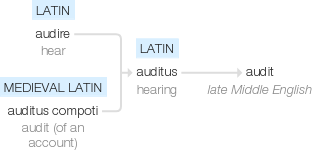
Audire: to hear
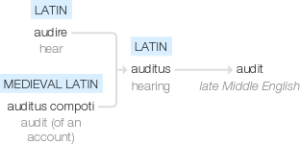
The English word audit arrived in the early fifteenth century from the Latin auditus, meaning a hearing or a listening. Auditus is the past participle of the verb audire, to hear. The same root gives us auditorium, audible, and audience. In an overwhelmingly oral culture, accounts were read aloud by a steward while an independent official listened, questioned, and compared the spoken record against witness testimony and physical counts.
Athens: the logistai and the euthynoi
The practice reached remarkable sophistication in classical Athens. Every magistrate who handled public money was subject to mandatory review. Two boards did the work. The logistai, a panel of ten chosen by lot, examined financial accounts of serving officials every thirty-six days and at the close of an official’s term. The euthynoi conducted a broader examination of official conduct. Any citizen had three days after the accounts were rendered to lodge a complaint, which could be referred to a jury of several hundred citizens drawn by lot. Selection by lot protected against capture. Fixed timetables protected against delay.
Rome: quaestors and accounts read in the Forum
Rome inherited the practice and gave us the words. The quaestores became custodians of the public treasury. By the late Republic, provincial governors were required to submit their accounts for examination, read aloud before witnesses. The word that stuck to our profession is the Latin one that describes the method: audire, to listen.
Risk: a much younger word
The auditor’s vocabulary is ancient. The risk professional’s is medieval. The word risk has no classical Latin form; it appears in Late or Medieval Latin as risicum. Its first documented use is a notarial contract recorded in Genoa on 26 April 1156, concerning a maritime loan. Risk is born in shipping. Three etymological traditions compete: from the Greek rhiza (a submerged rock); from the Latin resecare (to cut off); or from the Arabic rizq (divine provision), transmitted through Mediterranean commerce. Whichever origin prevails, the word carried from the outset the sense that risk can be described, priced, and transferred. Audit arose to give account of what had happened. Risk arose to give account of what might.
The DNA of the profession
The Athenian insisted that every magistrate be heard out, in public, by independent reviewers. The Roman treated the reading of an account as a civic act. The medieval Genoese gave us a word for the hazard that every honest account must contemplate. Together, they describe the work we still do: listen carefully, verify independently, report clearly, and quantify what remains uncertain. The technology of the audit has moved from the agora to the ledger to the cloud. The essential posture has not. To audit is, still, to hear — and to make what is heard worth trusting.